
Scope and finish standard
Be specific about the outcome: road crown, crossfall, drain lines, tie-ins, and what “smooth enough” means for your next step—compaction, surfacing, or traffic.
Serving Bulawayo, Bulawayo Province & surrounding areas
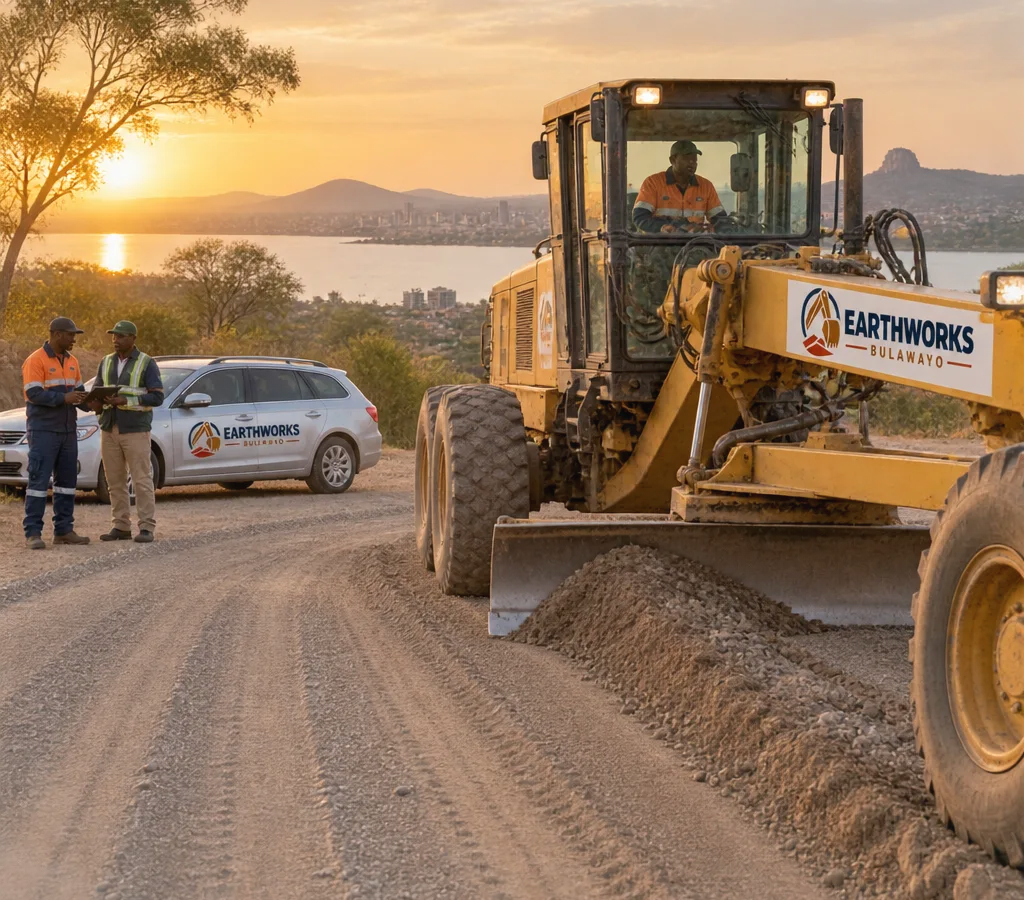
Grader Hire · Bulawayo & Zimbabwe
Book a motor grader for road shaping, site levelling, and drainage formation in and around Bulawayo, with clear scheduling and a practical scope that matches your job.
Plan the finish before the machine arrives
If you are searching for Grader Hire Zimbabwe, you are usually trying to hit a tight programme: shape a road after haul traffic, level a platform before concrete, or cut drains before the rains. Earthworks provides grader hire based out of Bulawayo at 2 Bristol Road South, with work planned around access, material condition, and the finish you need.
A grader is at its best when the job is defined in practical terms: what you want the crossfall to do, where water must go, what areas must stay untouched, and what level of smoothness is acceptable for the next trade. That is how we approach scope, because it keeps production predictable and avoids rework.
Earthworks was founded in 1985, and our work is shaped by long experience in Zimbabwe's excavation industry. If you need an earthmoving Zimbabwe company serving the Bulawayo area to plan grader time alongside other plant on a site, we can coordinate around the sequence so the grader arrives when it can actually keep moving.
Use the right machine for the task
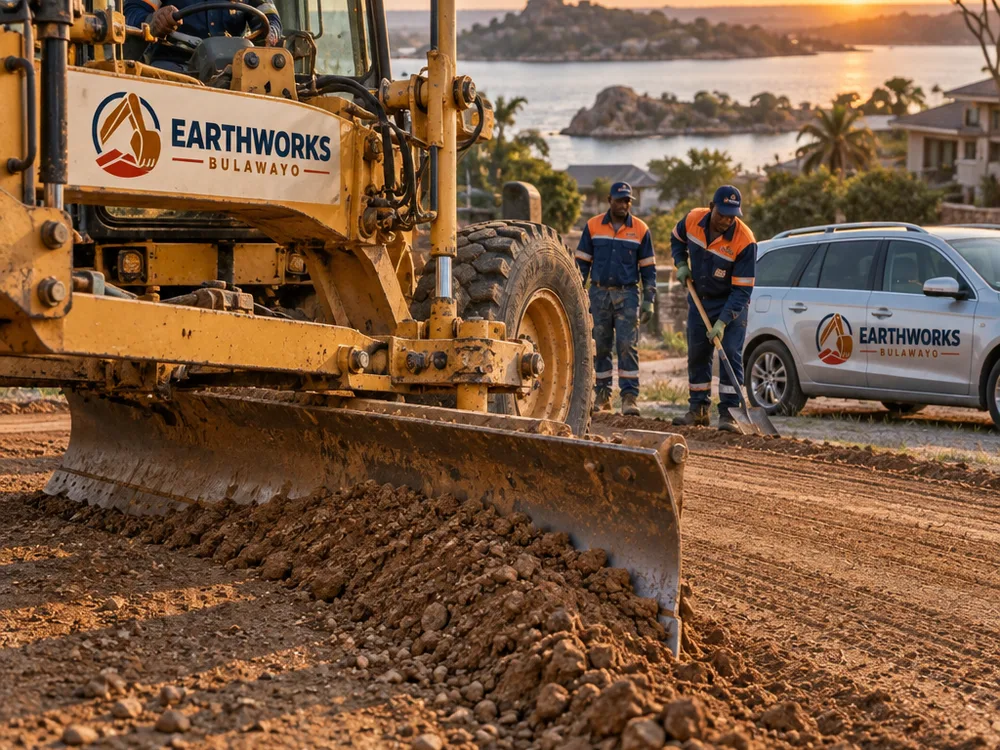
A motor grader is a finishing and shaping machine. It is built to cut high spots, carry and place a thin layer of material, and produce consistent levels and falls over distance. For many clients, the biggest value is control: you can achieve a smooth, drainable surface without overworking the material.
Common grader hire uses in Bulawayo include:
A grader is not a substitute for bulk earthworks. If you need major cut-to-fill, removal of hard material, or building up levels with imported fill, you typically stage the job so bulk movement happens first, then the grader trims and shapes to final falls.
Compare the complete working plan
Be specific about the outcome: road crown, crossfall, drain lines, tie-ins, and what “smooth enough” means for your next step—compaction, surfacing, or traffic.
Moisture content changes everything. Very dry material can ravel and corrugate, while saturated sections can pump and rut. Plan water and traffic control so grading lasts.
A grader needs room to run long passes. Tight yards, stacked materials, and parked equipment reduce productivity, so clearing the work zone often saves time.
Levels matter, but drainage matters more. A small error in fall over a long run can hold water, soften the base, and undo the work after the first storm.
Grading is most efficient when the machine can keep moving. If other plant is still excavating or dumping in the same area, you pay for waiting instead of progress.
01
You tell us what you are building or maintaining and where the grader will work. We confirm key outcomes like falls, tie-ins, and any areas that must not be disturbed.
02
We check access for the machine, traffic management, and whether bulk earthworks or material delivery must happen before grading starts.
03
We plan the passes: cutting, windrowing, spreading, and trimming. For roads, we align the sequence to restore crown and clear drainage paths rather than just flattening.
04
As we work, we verify levels and drainage behaviour across the length of the run. Touch-ups focus on low spots, transitions, and drain outlets where water concentrates.
05
We leave the area ready for compaction, surfacing, or use, depending on your programme. If the surface will carry traffic immediately, we plan the finish to suit.
Indicative machine rates
Grader hire in Bulawayo typically ranges from about US$80 to US$140 per hour for a motor grader, or roughly US$650 to US$1,100 per day, depending on the machine size, minimum hours, and the job's travel and setup time. Short trimming tasks often price at the higher end per hour, while longer road re-shaping runs can suit a day rate.
Final cost depends on the length of runs, how much cutting versus trimming is needed, material condition—too wet or too dry slows production—access and turning room, and whether rework is likely due to traffic or ongoing dumping. Exact pricing is confirmed once the work area and schedule are agreed.
Shape, drainage, and finish
Practical booking answers
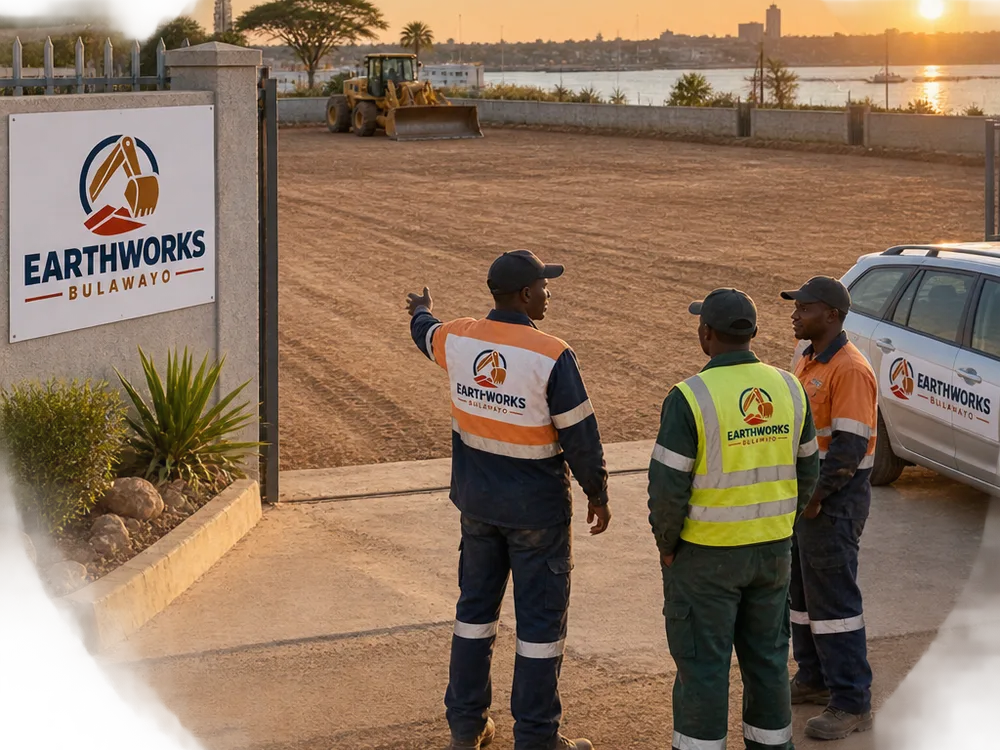
Availability depends on the date and how long you need the machine, but scheduling is always easier when the work area is clearly defined and the site is ready for uninterrupted passes. Share your preferred day, location near Bulawayo, and the approximate metres of road or square metres of yard so we can propose a realistic slot.
Yes, Earthworks can support grader hire outside Bulawayo when the scope and programme justify the travel and mobilisation. The key is bundling enough continuous work so the grader is productive once on site, rather than moving for small isolated touch-ups.
To price accurately, we need the work location, the approximate length or area, what material is on the surface—existing gravel, crusher-run, or natural soil—what you want the surface to do for drainage, and whether trucks will be driving on it during or immediately after grading. Photos and a simple sketch of the problem areas also help.
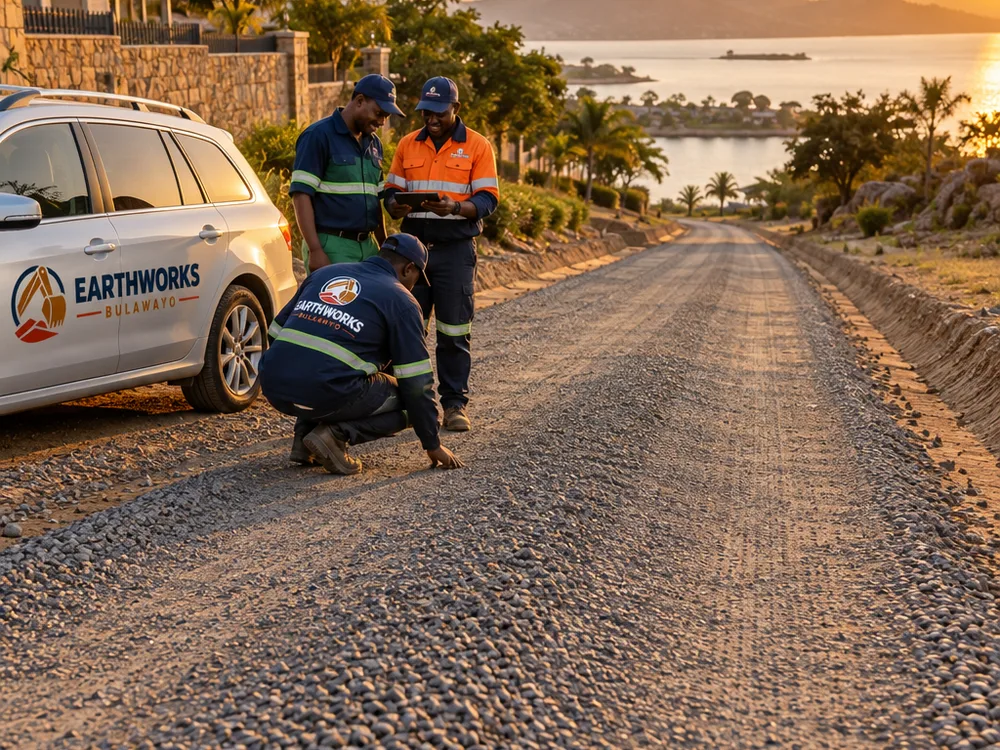
A grader can remove corrugations and reshape a gravel road, but lasting results depend on restoring the right crown and re-establishing drainage paths so water does not sit on the running surface. If the existing layer is too thin or contaminated with fines, you may also need additional gravel to rebuild the wearing course before final trimming.
Most of the time, you grade to correct shape and drainage first, then add gravel where levels are short, then do final trimming and shaping. The right sequence depends on whether you are rebuilding levels or only refreshing the running surface.
Grader hire is normally priced around machine time and mobilisation, with the work defined by the outcome you need: shaping, trimming, spreading, or drainage formation. If you need additional plant for bulk movement or compaction, that is planned as separate scope so the grader time is used for what it does best.
Choose a grader when the goal is level control, smooth finish, and consistent falls over distance. Choose a dozer when you need to push and move material in bulk, strip, or build up levels quickly. Many sites use both: dozer for bulk work, then the grader for final shape and drainage.
Schedule the machine around your work
Send the location, the length or area to be graded, and the finish you need. Earthworks will come back with a clear scope and a schedule that fits your work in Bulawayo or further afield.